 06:3606:3607:2503:0300:22
A snow removal business clears driveways, sidewalks and parking lots after each storm, and usually salts them too. You can start small with a snowblower and a pickup, or put a plow on a truck you already own. Most of the creators run it as the winter half of a lawn care, landscaping or pool business.
 Facebook group that you're clearing driveways this winter, and take the name and address of anyone interested so you can quote.
No equipment needed yet. Borrow or buy a used snowblower once a few people say yes.  07:17
 11:36
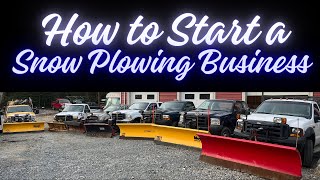 05:15
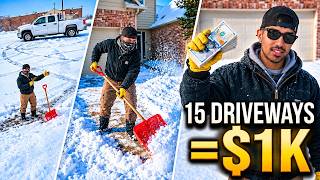 00:34
Each clip opens at the exact moment on YouTube.
06:37 03:32
 02:3703:03
 01:59Facebook ads, no contractsMalik_Speaks02:17
You clear snow from driveways, walks and parking lots after it falls, and often salt or spread ice melt. Homeowners pay about $40–100 a driveway visit; commercial lots pay more per push and add salting, which one operator says carries most of the margin. Many people run it as a snow removal side hustle next to a winter job, or pair it with lawn care so the same customers and truck earn all year. Lots need a plow truck, written contracts and serious insurance, because, as one operator puts it, you are really in the business of preventing slip and falls. How much you make depends on how much it snows where you live. 08:23 15:5804:0302:51
Four quick questions about the day-to-day work the creators describe.
Real US Google searches, and an example of local competition. Data from DataForSEO, 2026-11-24.
02:4915:39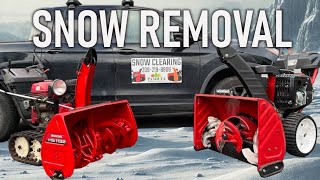 12:1306:3710:0902:38
The smallest bet is a snowblower: one beginner says good used Honda blowers hold their value and resell for about what you paid, and one first-timer simply borrowed a friend's. The bigger risk is fixed winter costs. One small crew needs $40–50K of snow revenue a winter just to break even, and insurance is owed whether it snows or not. None of the 10 videos gave resale prices for plows or trucks, so we don't show a worst case for those. 03:1700:3406:1906:29
Our estimate A ~$750 snowblower ÷ $60–100 a driveway visit ≈ 8–12 pushes, before gas; we show 10. Brian's Lawn Maintenance puts it at 7–10 driveways. A $10,000 plow at $100 a driveway needs about 100 pushes, which is why one commercial operator says that route takes forever to pay off. 07:0008:2317:45
If you're working out how to start a snow plowing business or a smaller snowblower route, this is the order the creators recommend: customers and insurance before big equipment. Tick steps as you go; progress saves on this device.
Here's a one-page plan filled in with this guide's figures. Swap in your own snowfall, prices and costs; one company bases every price on its area's average yearly snowfall. 02:49
| Services | Residential driveways and walks with a snowblower first; plowing, salting and small commercial lots later 00:4614:0412:43 |
|---|---|
| Startup budget | $600–850 snowblower, or $3–10K for a plow on a truck you own; about $30K for a commercial plow, salter and insurance 06:3714:2610:09 |
| Prices | $40–100 per driveway visit; $1,550 for one solo operator's driveway season; $245 a push for a 1-acre lot 09:5308:2303:0303:32 |
| Snowfall basis | Yearly snowfall ÷ an average storm = pushes to expect (45 in ÷ 3 in = 15 for one Detroit company) 02:4903:51 |
| Yearly costs | Insurance (one small crew pays $12,000), salt at about $120 a ton, truck repairs (the same crew budgets ~$10,000) 02:3802:5002:16 |
| Break-even | About 10 pushes to pay off a snowblower (our estimate); one small crew needs $40–50K a winter to cover its snow costs 06:19 |
| Marketing | Existing lawn customers, your town's Facebook group, a  Google profile; Facebook ads the night before a storm if you sell per push 07:1711:3605:0801:59 |
| First-season goal | 10–15 driveways in one town, the base one operator built from 11:36 |
Creators split three ways. Seasonal contracts pay a fixed price whether it snows or not; per push pays only for visits you make; a hybrid sells a season with a ceiling, after which per-push rates kick in. 13:5910:16
| Seasonal vs per push | ||
|---|---|---|
| How you get paid | Seasonal: a fixed price in monthly payments ($1,550 in 4 for one driveway route; $2,490 a month, Nov–Mar, for one commercial site) · Per push: each visit, often paid the same day | 03:0312:3102:34 |
| Light winter | Seasonal: still paid, no refunds in one company's contracts · Per push: little or no income | 10:1615:39 |
| Heavy winter | Seasonal: safe only with a ceiling (one company's reverts to per push after 45 in) · Per push: customers can get a $4,200 bill after two snowy weeks | 15:0429:26 |
| Who it suits | Seasonal: solo residential routes and businesses with budgets · Per push: operators with little manpower who want control of their time | 03:3800:1103:06 |
| Watch out for | Seasonal: unlimited-push deals in a big winter · Per push: slow or missing payment | 33:4426:3607:13 |
Lots pay more per push and add salting, the most profitable part of the work, but they need a truck plow, a salter, written contracts and serious insurance. Most creators started with driveways and moved up. 15:5810:09
03:3205:4808:1204:0715:5718:4315:5815:3834:2022:10Every creator who does lots treats insurance as step one, not an extra. This is what they say; coverage and requirements vary, so check with a licensed agent and your state's rules. 02:17
02:1702:3302:3712:0603:1520:5821:1511:5915:5013:47Most creators run snow as the winter half of a lawn, landscaping or pool business: the same trucks and customers bring in money in the off-season. 02:2100:31
07:1700:2200:3112:2408:5806:1902:21Brian expects 20–30% of lawn customers to convert; one first-timer filled his first snow day with old clients who messaged him on Facebook
07:1700:08Facebook groupsOne post got one operator 10–15 driveways in his first year, all in the same town
11:36Facebook adsA per-push operator switches his ad on the night before a storm; a commercial operator says small Facebook ads work well for new snow companies
01:5906:46Google Business Profile and a snow pageFree. One solo operator's lead flow comes from ranking on Google, but SEO takes months, so start early
06:3305:0807:54Leave a door hanger when nobody's home and flyers on community boards, or drive around during a storm and offer help
06:1107:12Neighbours flag you down while you're plowing; one push can add several customers
05:50A growing Michigan company mails postcards, runs digital ads, canvasses door to door and has a salesperson make cold calls
01:02Wondering how much to charge for snow plowing? These are the figures the creators gave. Prices depend on your snowfall and local market, so use them to sanity-check your own.
| Job | Price | Sources |
|---|---|---|
| Residential driveway, snowblower or plow | $40–50 (Canada) · $50–80 · $60–100 | 09:5310:1306:4808:23 |
| Driveway on a tight one-truck route | $60–75 | 12:09 |
| Driveway minimum, one Michigan company | $100 | 21:28 |
| Big driveway with shoveling | $200–400 a visit | 13:26 |
| Residential season, solo operator | $1,550, in 4 monthly payments | 03:03 |
| 1-acre lot, 1.5–3 inch push | $245 · target $175–215 | 03:3221:55 |
| Commercial sidewalk shoveling | $45 a visit | 05:31 |
| Bulk salt, applied | $180–300 a ton (bought at $80–120) | 07:3607:1702:50 |
| Ice melt, applied | $30 a bag | 10:00 |
| Seasonal package, small commercial site | $12,450 for a 1-acre site (up to 45 in) · $8–15K for 10 plows and 35 salt runs | 11:1509:04 |
16:2818:4308:1321:2822:1011:0905:0800:14Facebook ad on the night before the storm 01:5912:2201:4001:1415:5013:4713:2608:4617:2604:4609:0515:5814:0801:4019:3403:0801:4008:2902:1720:5802:3701:0318:4303:38• Per push: same-day money and control of your time 03:06• A mix, with ceilings that revert to per-push rates 13:5916:10• We went from none to all seasonal in 3 years 24:17The mistakes the creators say they made, ranked by how many of them mention it.
08:1307:3010:0422:1002:1703:1504:59These figures come only from the creators' own snow businesses. Snow pays by the winter, so we spread each figure over the months it snows. Hourly rates, targets and napkin maths are listed separately below.
12:3512:43* Our maths: per-winter figures ÷ the months it snows (Dec–Mar for the solo operator, whose contracts bill in 4 payments; 4–5 months for the crew). The crew owner says snow costs him about $40,000 a winter before fuel, runs it alongside a pool business and is considering quitting snow. No creator gave a first-month figure.
13:1204:2617:3209:0603:1206:3703:0308:4614:0409:0515:5816:0220:2909:04Real operators from the source videos. Results are as they told them.
06:3606:3607:2503:0300:2212:35Facebook post.$80–100K most winters against ~$40–50K of costs; now weighing whether to quit snow12:3506:1900:2411:3604:0304:0308:0608:1300:3501:11Facebook ad the night before each storm.$400–500 in 4–5 hours on a storm day; one client paid months late01:1101:5902:3407:1302:5102:3302:3803:5515:3901:0414:0610:4426:3607:1302:04Labels show whether each speaker runs the business and whether they sell something. Dates are approximate, from YouTube's “x years ago”.
Facebook ads helpFacebook group