 20:1020:1013:1100:0021:56
Reselling (also called flipping) means buying things cheaply at thrift stores, garage sales, flea markets, Goodwill bins or in liquidation pallets, then selling them online on eBay, Poshmark, Whatnot or  Facebook Marketplace. Several creators started with $0 by selling what was already in their closet, and all of them say the profit is made when you buy, not when you sell.
Each clip opens at the exact moment on YouTube.
01:56 02:11
 05:13
 11:15
 15:24
 12:21
You buy items below what they sell for online, clean and photograph them, list them, and ship them when they sell. Most of the 10 creators source clothing, books, toys and media from thrift stores, flea markets and Goodwill bins, and sell on eBay first. Others buy whole liquidation pallets of store returns and sell them locally on Facebook Marketplace. The common rule is to check sold prices before you buy: one coach aims for a $3 average cost and a $25 average sale, which leaves about $18 per item after eBay fees. This is thrift flipping as a real business: it grows by listing more items every day, crosslisting to Poshmark or Whatnot, and later buying in bulk. 02:1103:30 02:15
 05:59
Four quick questions about the day-to-day work the creators describe.
Real US Google searches, and an example of local competition. Data from DataForSEO, 2026-11-24.
Facebook Marketplace, so the creators say you don't have to find customers. The competition is in sourcing and pricing: buy cheaply, check sold prices and list consistently. One full-time couple says reselling is not dead. 03:3911:2815:47The worst case is stock that never sells. Every creator who buys in bulk ends up donating or salvaging some of it: one couple's returns pallet had units with missing hoses and a dented one, which they sold as salvage for $46. Auction bids are binding, so you must collect what you win. None of the sources gave a total-loss figure, so we don't show one. 55:0404:2806:5002:49
If you're wondering how to start reselling, this is the order most creators suggest: sell what you have, learn prices, then spend money on stock. Tick steps as you go; progress saves on this device.
One coach tells new resellers to decide their hours and buying rules before they ever go sourcing. Here's a one-page plan filled in with this guide's figures. Swap in your own. 01:0202:45
| What you sell | Clothing, books, toys and media from thrift stores to start; liquidation pallets later 08:33 10:4102:15 |
|---|---|
| Startup budget | $0 (your own things) to about $500; median about $250 20:1011:15 |
| Buying rules | $3 average cost, $25+ average sale, 50%+ sell-through in 90 days 02:1102:3002:45 |
| Where you sell | eBay first; crosslist clothing to Poshmark; bulky items on Facebook Marketplace 05:2005:5913:15 |
| Fees and supplies | eBay about 12.5–15% of each sale; scale about $25; mailers about 7¢ each 11:1304:00 06:1205:34 |
| Weekly target | 28 new listings a week (4 a day) for about $2,000 a month net once sales catch up (one coach's model) 04:19 |
| Break-even | About 14 sales to recover a $250 start (our estimate) |
| Paying yourself | About $10 of each $18 profit; reinvest the rest 15:23 |
Liquidation pallets are store returns, overstock or surplus sold in bulk on sites like B-Stock and GovDeals. They can be very cheap, but freight, condition and the time it takes to sell decide the profit. 02:1551:41
| Lot | What happened | |
|---|---|---|
| $1 GovDeals pallets of school books | About $5,000 in sales over 2 months; the curriculum was the money-maker | 05:2617:34 |
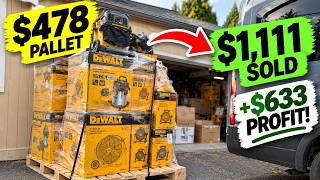
| $478 B-Stock pallet of Costco-return shop vacs and fans | $1,111 in local sales and $633 profit in about a week, after lots of testing and lowball offers | 11:1512:0614:06 |
| $7,000 of B-Stock washers and dryers (~$250 each) | Reselling for $750–900 each on Facebook Marketplace | 02:2402:29 |
| $5,400 of Rent the Runway clothing (~900 items, ~$6 each) | $1,200 from six Whatnot shows so far; far too slow to list one by one on Poshmark | 36:3638:1936:09 |
| Stanley tumblers bid at $14.35 a unit | Shown as a bad deal: they resell for about $25 before freight | 19:18 |
10:0510:3015:2416:1315:0410:5412:3502:02The creators sell very different things. What they agree on is boring, proven items over hyped ones. 05:35
| Category | What the creators say | |
|---|---|---|
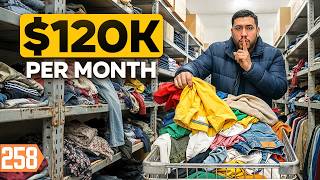
| Mid-grade clothing ($20–30) | 80% of a $120K-a-month store; ships in a 7¢ mailer | 08:3305:34 |
| School curriculum and book sets | $45 average sale; some sets sell for $60–100 | 16:0547:56 |
| Large appliances and outdoor furniture | Chris Koerner's pick for Facebook Marketplace | 03:23 |
| Sealed box sets, games, DVDs and toys | Sealed hardcover sets are always worth $15+; single DVDs only if ~$11+ | 16:5721:16 |
| Seasonal stock bought off-season | Buy Christmas stock in July or after the holiday, sell when the season starts | 40:0542:18 |
| Skip: electronics | Things break, they need testing, and margins are thin | 03:2759:20 |
| Skip: baby and kids' clothes | They sell a lot slower | 18:18 |
| Skip: hyped items (iPhones, sneakers, Stanley cups) | Too much competition and no margin | 05:2619:18 |
54:21The most buyers; its fees pay for the marketing that brings them. The hardest platform to learn, with the biggest payoff
11:2805:52Facebook MarketplaceBest for bulky local items like appliances and furniture. Buyers are already there, and you can list an item before you buy it to test demand
03:3913:1516:38Clothing. One couple crosslists 30 eBay items a day in about 3 minutes; a full-time seller lists straight from the Poshmark app
05:5904:26Live auctions. One seller made $1,200 from six one-hour shows with no followers. Learn the shipping settings first
38:1945:1917:03Split opinion: 90% of one big seller's sales came through them; a coach says skip them when you're starting
26:3604:08Reselling profit is the sale price minus what you paid, the platform fee and shipping. These are the buy and sell prices the creators gave. eBay takes about 12.5–15% of each sale by their figures. None of them quoted Poshmark fees, Mercari fees or Whatnot fees, so check each platform's current fee page before you price.
| Job | Price | Sources |
|---|---|---|
| Flea-market jacket (his first ever flip) | $1 → $35 | 00:50 |
| Flea-market haul, 15 items in 10 minutes | $75 → about $450 (projected) | 01:56 |
| Goodwill bins, clothing by the pound | About $1.96/lb; $196 → about $3,000 | 13:4113:50 |
| Thrifted clothing, one coach's model | $3 → $25, about $18 kept after ~15% fees | 02:1102:3003:30 |
| Book bought at a flea market | $1 → $18; $5 shipping and $3 eBay fee leave about $8 | 23:28 |
| Animatronic toy from Goodwill | $3 → $30–35 | 15:55 |
| School curriculum from $1 pallets | $45 average sale; first set sold for $350 | 16:0505:13 |
| Washers and dryers from B-Stock | About $250 → $750–900 each | 02:2402:29 |
| Returns pallet of shop vacs and fans | $478 → $1,111 in sales | 11:1511:58 |
| Rugs from a liquidation lot | About $8 → $100–120 | 53:58 |
09:5610:4209:3916:0923:1100:2701:2201:5803:0305:1005:4905:5918:3726:5442:1810:4203:1303:2324:0603:5702:4514:1813:0213:5908:5312:0518:3706:2108:4909:1226:36• Skip them while you're starting 04:0815:13• Free shipping on bulky items cost a fortune 02:30• Use buyer-calculated shipping 11:15The mistakes the creators say they made, ranked by how many of them mention it.
09:5629:2119:5802:3045:3905:1005:2636:0918:35These figures come only from the creators' own reselling businesses. The big outlier, a hypothetical model and napkin maths are listed separately below.
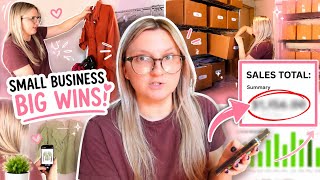
* The Poshmark seller's $1,780 is the net Poshmark paid out from $2,232 in sales, before the cost of her stock. The couple's figure is $100,000 a year they pay themselves (≈ $8,300 a month); the $10,000 and $18,000 figures are monthly sales. The $5,000 from two book pallets came over about two months.
00:0021:5604:1905:1119:0652:5806:2100:2902:1103:1405:5936:1702:0727:1817:40Real operators from the source videos. Results are as they told them.
20:1020:1013:1100:0021:5605:2605:2617:3418:5218:0800:0800:0815:1303:0311:15Facebook Marketplace.$1,111 in sales, $633 profit in about a week11:1511:5812:0612:2112:2110:2114:5109:1109:3704:2851:4102:4923:2308:4809:4004:3007:3214:0603:2759:20Labels show whether each speaker runs the business and whether they sell something. Dates are approximate, from YouTube's “x years ago”.