 Facebook
 03:4303:4304:0713:4600:2009:15
A pest control business sells homeowners a recurring plan, usually a visit every quarter, to keep spiders, ants, rodents and wasps out, plus one-off jobs like mosquitoes, termites and wildlife. Pesticide application is licensed, so most owners work for a licensed company first. After that the kit is cheap, and the money is in recurring customers on a tight route.
No equipment needed yet. If you've never done the work, ask the same companies whether they're hiring technicians. 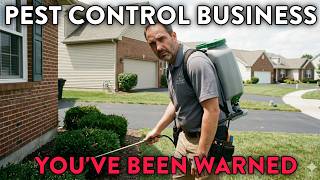 01:0426:3416:57
Each clip opens at the exact moment on YouTube.
04:07 12:21
 05:2801:29
 00:38
 02:46
You inspect the home, knock down webs and wasp nests, treat the foundation and set rodent bait stations, then come back every quarter (monthly in some southern markets). Customers pay a bigger first visit and a smaller recurring fee, often billed monthly. Margins come from route density: one Colorado company does 15–20 visits a day per technician, and the chemicals cost $3–4 a visit. The hard parts are the licence, which usually means working for a licensed company first, and winning customers who already have “a guy”. Add-ons like rodents, mosquitoes, termites and wildlife raise the ticket. 11:4611:1704:1832:0113:1416:3208:09 14:19
Four quick questions about the day-to-day work the creators describe.
Real US Google searches, and an example of local competition. Data from DataForSEO, 2026-11-24.
03:01The cash at risk is small: a few hundred dollars of hand equipment. The bigger cost is time, because the sources needed one to three years of licensed experience before they could own a company. On broker sites, several pest control franchises sold for little more than their van and equipment. None of the sources gave resale prices for sprayers, so we show no worst-case figure. 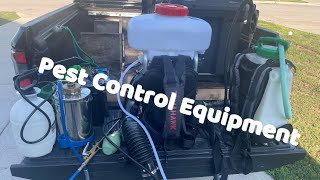 23:1816:3200:4500:41
Our estimate The $5,500 median start ÷ about $480 kept per quarterly customer per year (4 visits at $135, of which roughly $120 is left after technician time and $3–4 of chemicals, one Colorado company's figures) ≈ 12 customers. At the $12,000 top of the range it's about 25. This ignores insurance, fuel, software and marketing. 11:4300:1513:1404:07
The order the operators followed: licence and experience first, then paperwork, a small kit, and recurring customers. Tick steps as you go; progress saves on this device.
A one-page plan filled in with the figures from these videos. Swap in your own numbers and your state's licence rules.
| Services | General pest on a quarterly plan first; add rodents, mosquitoes and termites as you learn 11:1717:1214:19 |
|---|---|
| Licence | Experience with a licensed company, then your own licence (1–3 years in these sources) 00:4516:32 |
| Startup budget | Under $400–1,000 of hand equipment; $10,000–12,000 in two operators' cases 23:18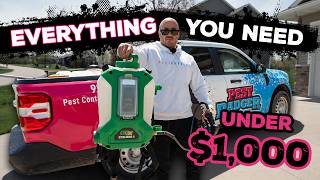 00:0324:1204:07 |
| Prices | Initial $150–399; recurring $94–250 a visit; mosquito $89–149 06:1005:2801:3405:3505:40 |
| Monthly costs | CRM $100–200; insurance about $65 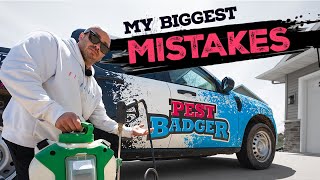 00:3003:01 |
| Break-even | About 12 quarterly customers kept for a year pay back a $5,500 start (our estimate) |
| Marketing | Friends and family, door knocking, property managers,  Google reviews, a referral offer 01:2206:4610:4022:3112:21 |
| First-year goal | One Colorado company did $180K in its first nine months with two owner-operators 21:43 |
Pesticide application is licensed. Check your state's pesticide licensing agency (often the state department of agriculture) before you spray for anyone or open a company: the pest control license categories, exams, experience requirements, supervision rules and insurance filings differ by state and change over time. Everything below is only what the operators said about their own states. It is not legal or safety advice. 00:1816:59
| Topic | What the operators said | Sources |
|---|---|---|
| Licence levels | Most states have a lower licence that lets you spray for another company and a higher (master) licence needed to own one | 16:2416:2716:34 |
| Experience before owning | Texas: eligible to test after a year as a technician. Colorado: three years. “Usually two to three years” | 00:4516:3216:59 |
| Exams | Texas: a laws-and-regulations exam plus category exams (household pests, termite, lawn and ornamental, fumigation). Colorado: 70% to pass | 01:5401:3118:24 |
| Fees (Texas) | $125 to apply, $64 per retake, about $300 for the business licence | 01:1302:3206:10 |
| Supervision period | Arizona: new technicians can spray for 3 months before passing the applicator test; the employer paid for schooling | 20:1020:1220:32 |
| Licence categories | General pests and rodents; separate licences for wildlife, termite, mosquito and more | 01:3801:51 |
| Using someone else's licence | Texas: partner with a certified applicator. Colorado: one company started with a licensed family friend as its qualified supervisor, who carried the responsibility and had to supervise the work | 01:0216:4219:2018:35 |
| Insurance | Texas: insurance filed with the state on a specific form; $1M of cover was about $800 a year | 02:4803:1403:01 |
| Moving states | Some states recognise another state's licence; otherwise you start over | 20:31 |
00:1820:0102:48A pest control business is a subscription. These are the route numbers the operators gave for recurring quarterly service. 11:1711:20
| Item | Figure | Sources |
|---|---|---|
| Price of a quarterly visit | $135 (billed ~$45/month); $94 in one Idaho quote | 11:4301:34 |
| Time per visit | ~20 minutes | 12:14 |
| Technician pay | $20–25 an hour | 12:57 |
| Chemicals per visit | $3–4 | 13:14 |
| Left after labour and chemicals | About $120 of $135 | 00:15 |
| Visits per technician per day | 15–20 (20–25 on dense door-to-door routes) | 32:0532:0112:42 |
| Revenue per truck, at the ceiling | $200–250K a year | 08:36 |
| Customers lost per year | ~20% industry; 8% at one company; 50% at some | 09:0310:4407:10 |
| How long customers stay | 3–7 years | 09:13 |
| Door-to-door sales teams' fee | 85–130% of first-year revenue | 13:55 |
| Ad spend target per customer | About 35% of first-year revenue | 22:42 |
Pest control businesses for sale are easy to find on broker sites, and the sources disagree on whether to buy or build. 00:35
00:3500:4102:5005:5404:4905:0705:2705:2025:0024:3324:3800:0000:0322:07One owner sent about 120 personal messages and got 15–16 customers for 30 minutes of work
02:4605:4906:00The channel most growth stories relied on. Results vary: 2 customers from 20 doors one day, none from 10 another. One researcher works out 15,000 doors for 300 customers
01:2923:3906:4606:5006:43One owner gets thousands of dollars of work a week from property managers; another has 15 contractors referring him
10:4011:1821:04Google reviews70–90% of one owner's calls come from Google; another puts a review link on every invoice
22:3121:37How much does pest control cost? Pest control prices vary a lot by market, home size and pest. These are the figures the sources gave, so you can sanity-check your own.
| Job | Price | Sources |
|---|---|---|
| Year of general pest, 4 visits (Idaho company quote) | $376/yr ≈ $94 a visit | 01:2901:34 |
| Quarterly general pest (Colorado average) | $135 a quarter, billed ~$45/mo | 11:43 |
| General pest, multi-state chain | Initial $199–399 · recurring $179–250 | 05:2805:35 |
| Initial visit and yearly value (Texas owner) | $150 initial · ~$500 a year | 06:10 |
| Average contract (large Arizona company) | $800–900 a year | 08:00 |
| Mosquito service | $89–149+ a visit | 05:40 |
| Rodent plan (Washington) | $120 a month, ~$10 in materials | 02:0500:13 |
| Ant initial treatment, then follow-up | $275 · ~$70 a month | 08:3408:43 |
| Mole trapping | $280 first month · $80 a month after | 16:2416:28 |
| Termite protection add-on | $1,200–1,500 | 20:39 |
| Vent guard, installed | $90 each ($30 cost) | 20:02 |
04:5904:3026:3426:4307:0108:1526:1226:2727:2807:1700:3611:4610:2410:5001:2523:2505:5207:5505:3908:5904:4211:2004:1225:3406:2903:2704:1320:3400:3607:1713:3411:1026:4303:1310:07• Their main growth channel 23:39• About a year of knocking to reach 300 customers 06:5317:17• Don't discount the initial just to win the job 04:30The mistakes the creators say they made, ranked by how many of them mention it.
01:3501:1101:5806:1305:3906:0506:2606:4207:1009:0307:4207:2000:3201:4601:25Pest control business income figures here come only from the operators' own businesses and a long-time owner's per-truck figure. Big-company and hypothetical figures are listed separately below. All rows are revenue, not take-home pay.
08:36The Colorado company netted 74% in its first year with the owners doing all the work, then 28% after hiring five technicians and an office person; the owners each pay themselves about $50K a year plus distributions. A struggling mosquito franchise made $57K a year after three years.
07:1109:2402:2900:0616:5719:4612:2122:3114:1920:3927:3229:1911:0306:02Real operators from the source videos. Results are as they told them.
03:4303:4304:0713:4600:2009:1524:1224:1216:4221:4321:4821:5201:2901:2903:1102:2907:1114:08 Home Depot hand sprayer and a cheap backpack sprayer; 15–16 early customers came from messages to people he knew.About 18 months in when he filmed14:0819:4605:4906:3809:1608:1207:1408:0905:0705:2005:5419:2014:3003:0631:0527:2821:5822:13
Labels show whether each speaker runs the business and whether they sell something. Dates are approximate, from YouTube's “x years ago”.