 00:0200:0200:36
 01:3715:2212:5714:56
Hot shot trucking means hauling time-sensitive loads with a heavy-duty pickup and a gooseneck or flatbed trailer, usually booked through freight brokers on load boards. A hot shot (or hotshot) business costs far less to start than a semi, but it is still regulated trucking: you need your own authority or a carrier to lease onto, commercial insurance, and enough cash to get through the first 90 days.
Insurance is the biggest upfront bill and quotes vary widely. It decides whether the rest of the numbers work.  04:05
 18:3719:49
Each clip opens at the exact moment on YouTube.
02:1015:0916:11 13:02
 14:10
 08:50
This guide covers how to start hot shot trucking from what the creators of 11 videos actually spent and earned. You use a 3/4- or 1-ton diesel truck and a 40-ft trailer, register your authority with FMCSA, bind insurance, and book loads on Truckstop or DAT, usually paid next day through a factoring company. Running non-CDL hot shot (26,000 lb or under) keeps the paperwork lighter but limits what you can haul. There is no salary: what you take home is rate per mile minus cost per mile, and the hot shot trucking salary people quote online is usually gross. Hot shot trucking insurance, at $15K–30K a year, is the biggest single bill. 00:27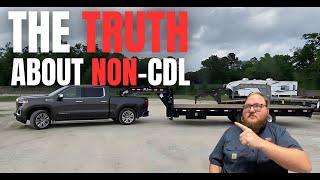 02:3518:3707:48
Four quick questions about the day-to-day work the creators describe.
Real US Google searches, and an example of local competition. Data from DataForSEO, 2026-11-24.
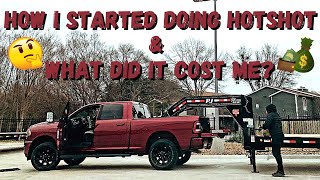 15:5201:19
The worst case in these videos: one operator's truck was in the shop for almost 9 months, he sold it back with negative equity, and it took him 2 years to clear the debt. No source gave resale prices for trucks or trailers, so we don't show a worst-case figure. 14:2915:1315:29
Our estimate A $14K–48K start ÷ about $7,300 a month for an owner who drives (one fleet owner's model: $2,300 company profit plus the $5,000 driver pay you'd be paying yourself) ≈ 2–7 months; we show the slower end. A real first 90 days was closer to break-even: $12,500 kept after diesel and fees, against about $154 a day (~$13,900) in truck, trailer, insurance and subscription costs. 14:1007:0714:5607:17
The order the creators followed, from cash in the bank to the first load. Tick steps as you go; progress saves on this device.
None of the creators showed a written plan, so this one is filled in with their figures. Swap in your own numbers. 13:02
| Setup | 3/4- or 1-ton diesel pickup and a 40-ft gooseneck flatbed; non-CDL stays at or under 26,000 lb combined 01:5005:57 |
|---|---|
| Startup budget | $14K leased on with your own truck, or ~$48K with your own authority (truck extra), plus $15–45K working capital 15:5210:0701:19 |
| Rates | $1.30–1.60 a mile in the first 30–60 days; $2 a mile as a planning baseline 02:3608:3305:49 |
| Monthly costs | About $17,800 on 10,000 miles, including 25% driver pay; insurance $1,160–2,600 a month 13:0230:5906:19 |
| Break-even | About 7 months for a $48K start (our estimate) |
| Finding loads | Truckstop or DAT, a factoring company, and a dispatcher if you're stuck 00:2724:3701:37 |
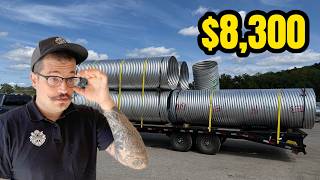
| First-month goal | About 10 loads and $8,300 gross, one operator's first month 15:0915:22 |
This is only what the creators described for their own pickups and trailers. Rules, fees and insurance minimums change and vary by state and by what you haul, so check FMCSA and your state's rules (and talk to an insurance agent) before you file or haul anything. It is not legal advice. 31:2313:38
| Requirement | What the sources said | Sources |
|---|---|---|
| USDOT and MC number | Filed together with FMCSA for $300; the DOT number covers hauling within your state, the MC number lets you cross state lines | 13:3814:1304:54 |
| BOC-3 and UCR | BOC-3 about $45–50; UCR about $60–75 for one or two trucks | 05:2216:2516:0906:09 |
| CDL or non-CDL | Non-CDL setups stay at or under 26,000 lb combined, e.g. a 10,000 lb truck plus a trailer under 16,000 lb; heavier setups need a CDL | 01:5002:4002:3513:41 |
| IFTA and IRP | Non-CDL single-rear-wheel setups under 26,000 lb skip IFTA and IRP plates in most states, per two creators | 01:32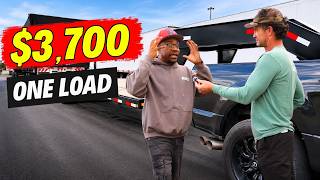 08:20 |
| DOT medical card | A short physical (eyesight, drug test) for about $62–65 | 06:2606:4809:42 |
| Annual DOT inspection | $45–90 at a shop; one operator paid $350 for a mobile inspection after truck stops wouldn't inspect a hot shot | 06:4814:3501:1001:31 |
| Hot shot trucking insurance | $1 million auto liability and $100K cargo cited; physical damage about 10–15% of the truck's value a year; general liability $500–1,000 a year; whole policies $15,000–30,000 a year | 17:1518:1218:2618:37 |
| What operators actually paid | $1,160 a month (3 years in); $2,000 a month in one fleet owner's model; $2,600 a month on a new non-CDL authority | 30:5905:0206:19 |
| Hours of service and ELD | Same rules as a big truck: 11 hours driving in a 14-hour shift, a 30-minute break after 8 hours, a 10-hour reset; an ELD costs $60–120 a month | 07:0621:0221:1921:5122:39 |
| USDOT number on the truck | Shown on both sides so weigh-station cameras can read it | 07:57 |
02:3903:0601:0503:06Most of these operators book freight from brokers on a load board and get paid through a factoring company. Deadhead, the empty miles between loads, is where the profit leaks out. 00:2715:10
| Topic | What the creators say | Sources |
|---|---|---|
| Truckstop | About $140–150 a month; two operators book from it | 03:4208:1300:27 |
| DAT One | Largest by freight volume; Pro tier about $150 a month | 24:1024:37 |
| Broker access for a new MC | Roughly 5–10% of brokers in the first 30 days, about 80% by 180 days, nearly all after a year | 08:0508:1808:2802:44 |
| Factoring | About 3% (3–4% for new entrants) to get paid next day instead of in about 30 days | 16:4725:3025:3604:11 |
| Dispatchers | One new operator's first load came via a dispatcher; a fleet owner says pay no more than 5% | 01:3709:4110:03 |
| Double brokering | A broker re-posts your load for less and pockets the difference; one operator only hauls for brokers his factor approves | 18:0717:2303:45 |
One fleet owner's typical month for a CDL hot shot running 10,000 miles. Our maths: $17,800 ÷ 10,000 miles ≈ $1.78 a mile, against his $2-a-mile planning rate, which leaves about $2,300 for the company. 13:0205:4914:10
| Cost | Per month | Sources |
|---|---|---|
| Truck payment | $1,000 | 03:35 |
| Trailer payment | $600 | 04:27 |
| Insurance | $2,000 | 05:02 |
| Fuel (10,000 miles) | $4,500 | 05:26 |
| Driver pay, or your own pay (25%) | $5,000 | 07:07 |
| Factoring (3%) | $600 | 08:02 |
| Dispatch (5%) | $1,000 | 09:41 |
| Maintenance reserve (~10%) | $2,000 | 10:52 |
| ELD, fuel card, bookkeeping | $600 | 11:57 |
| Tolls | $500 | 12:53 |
| Total | $17,800 of $20,000 gross | 13:02 |
 22:3307:1722:2416:29
Where most of these operators' loads come from; about $140–150 a month
03:4208:1324:3715:10One new authority booked nothing for two weeks until a dispatcher handled broker onboarding; a fleet owner says pay no more than 5%
01:1401:3709:41Two creators leased on: the carrier supplies the authority and loads for a cut
02:0105:4821:54Pay better (about $1,500 vs $1,400 from a broker on one run, plus a fuel surcharge); one fleet owner says non-CDL only works with your own customers
10:0301:4610:59One operator's local loads paid $5.30 a mile loaded, against $1.97 over the road
16:1116:2918:06Get print, sign and date on every delivery so the paperwork goes through first time
19:47Rates move with diesel prices and with the age of your authority. These are loads the creators booked or were offered.
| Job | Price | Sources |
|---|---|---|
| New authority, first 30 days | $1.30–1.50 a mile | 02:36 |
| At 30–60 days | $1.50–1.60 a mile | 08:33 |
| Planning baseline, one fleet owner | $2 a mile | 05:49 |
| Local loads, first 90 days | $5.30 loaded · $2.16 all-in | 16:11 |
| Regional loads, first 90 days | $2.28 loaded · $1.60 all-in | 16:21 |
| Over-the-road loads, first 90 days | $1.97 loaded · $1.26 all-in | 16:29 |
| Louisiana to Tennessee, 517 mi | $1,400 (about $1,500 to a direct customer) | 09:5210:03 |
| Alabama to Georgia, 282 mi, 350 lb | $800 | 31:57 |
| Pallet load, 221 mi | $600 offered, $700 after asking | 33:09 |
| 400 miles, experienced operator | $1,100 | 05:21 |
| Same-day local load in a slow week | $400 gross | 04:07 |
08:5009:0633:0900:2204:5804:2400:2233:0902:0621:0221:1919:4716:4705:0910:2801:3814:2005:5707:3400:4506:1709:3408:1808:0502:4416:4708:0204:1107:4806:5815:3523:3800:27• Wouldn't advise it; get a CDL and experience first 02:5805:48• Own authority: my company, my rules 16:08The mistakes the creators say they made, ranked by how many of them mention it.
05:0807:1705:3600:3606:1706:3001:4907:3401:0503:06These figures come from the creators' own trucks or one fleet owner's typical-month model. Big single loads and napkin claims are listed separately below.
* Kept means after diesel, dispatch and factoring only; truck, trailer and insurance payments still come out (about $154 a day for that operator). Weekly figures are shown × 4.3 on the bars. The $20,000+ first month was leased onto a carrier that took a cut, and the operator kept about half.
06:1906:4414:4106:5805:4802:3603:1508:2810:0318:0600:1807:07Real operators from the source videos. Results are as they told them.
00:0200:0200:3601:3715:2212:5714:5601:3101:3101:4802:0914:2915:2915:5600:2700:2700:0610:0300:0100:0103:4204:1100:4614:2907:1101:3814:2003:4518:0717:2322:3100:0902:3903:0604:2730:4719:0319:49Labels show whether each speaker runs the business and whether they sell something. Dates are approximate, from YouTube's “x years ago”.